Every year, thousands of Indian businesses spend lakhs on corporate gifts that are forgotten within a week. The problem isn’t the budget — it’s the approach. A generic hamper says you remembered the occasion. A logo-customised hamper says you understood your relationship. Having executed 500+ corporate gifting projects across India’s major metros, Hamper Hive has consistently observed that thoughtfully customized welcome kits create measurable impact on new-hire retention and employer brand perception. This guide walks you through exactly how to move from generic to customized: the customisation process, what it costs in INR, realistic timelines, and the tax rules that apply in India — so you can plan with confidence and gift with impact.
What Are Corporate Welcome Kits for New Employees?
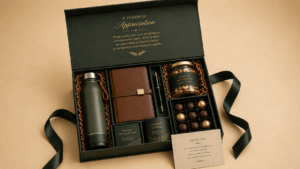
A corporate welcome kit for new employees is a curated collection of branded items and essentials designed to create a memorable first impression while reinforcing company culture. Unlike a standard onboarding package that focuses purely on paperwork and logistics, a customized welcome kit combines practical items (branded stationery, company handbook, personalized welcome letter) with thoughtful gifts (gourmet treats, self-care products, artisanal items) that signal your company’s values and attention to detail.
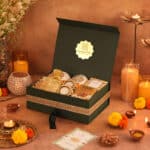
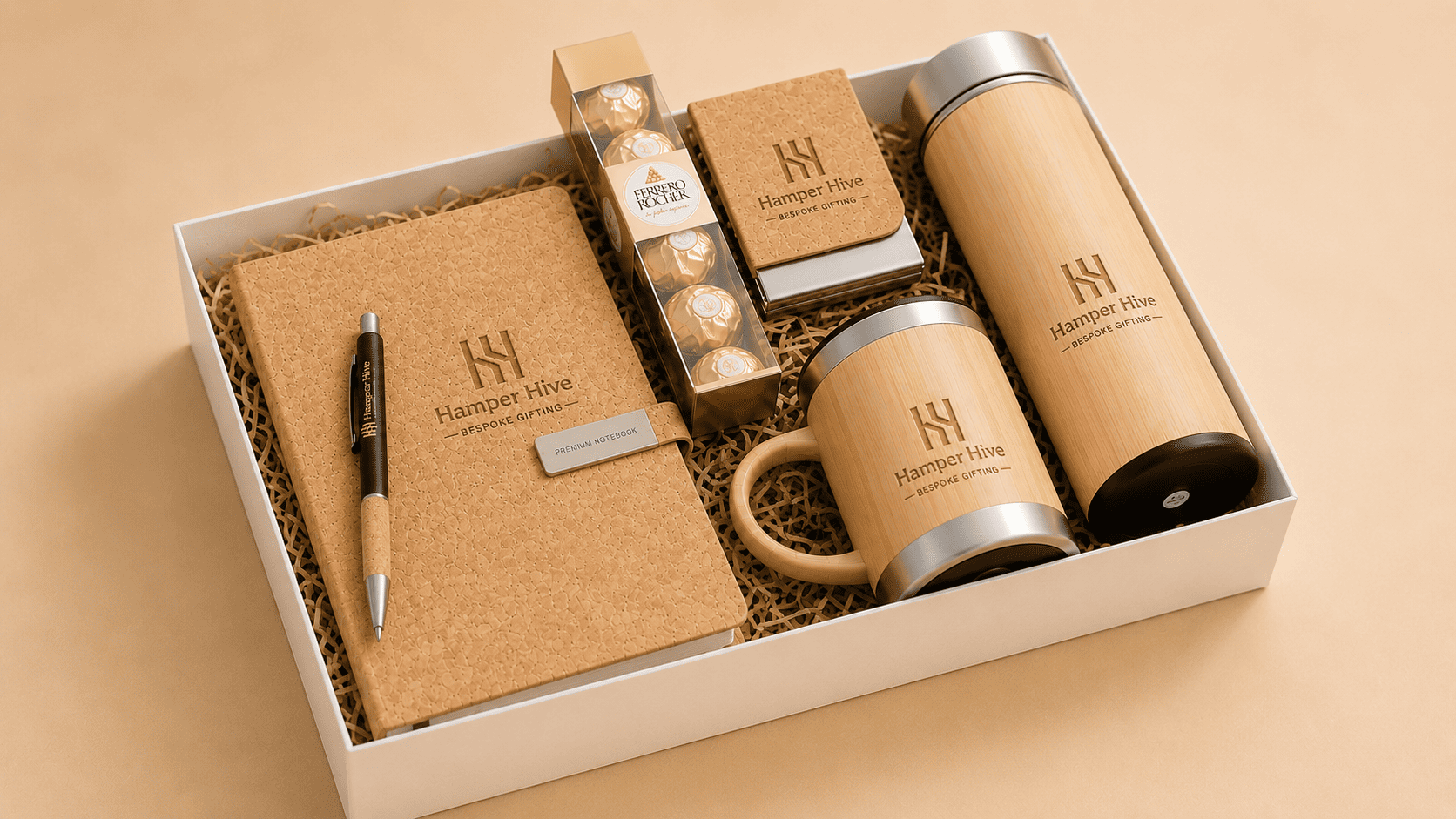
The distinction between generic and customized kits is significant. A generic kit might include standard items in plain packaging — functional but forgettable. A customized kit reflects your brand through logos, color themes, personalized messages, and curated products that align with your company culture. For example, a tech startup might include branded notebooks, premium coffee, a welcome letter from the founder, and a curated selection of wellness products. A financial services firm might emphasize premium stationery, a company handbook with the employee’s name embossed, and luxury self-care items.
Companies invest in welcome kits for three core business reasons. First, they build culture from day one — a thoughtfully designed kit communicates your company’s values before the employee attends their first meeting. Second, they reduce first-week anxiety and increase engagement — new hires who feel welcomed are more likely to stay and contribute meaningfully. Third, they create shareable moments — a beautiful welcome kit photographed and shared on social media extends your employer brand reach far beyond the individual recipient.
Why Customization Matters for New Employee Retention
The business case for customization is straightforward. A branded welcome kit sitting on a new employee’s desk, photographed for their Instagram story, or opened in front of the team — each of these moments reinforces your company in their mind in a way a generic gift cannot. It also signals something deeper: that your company is organized, premium, and attentive. When a new hire receives a kit with your branding, they’re not just receiving a gift — they’re experiencing your brand.
The relationship impact is real too. Companies that invest meaningfully in employee appreciation consistently see lower turnover and stronger engagement. A well-chosen, beautifully presented branded welcome kit communicates that investment far more powerfully than a cash bonus or generic card.
Consider the difference in practice. A generic hamper arrives in plain packaging with standard items. A customized welcome kit arrives in branded packaging with the employee’s name, includes products selected to match your company culture, features a personalized welcome message from leadership, and is presented with care. The second scenario creates a memory; the first creates an obligation.
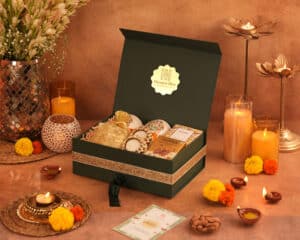
For companies with Diwali gifting cycles, customized welcome kits aligned with festival themes create deeper cultural resonance. An employee welcomed during Diwali season with a kit featuring festival-themed items, traditional sweets, and culturally relevant products feels a stronger connection to the organization’s values and the broader Indian business context.
What Should You Include in a Corporate Welcome Kit?
The contents of a welcome kit should reflect your company’s culture, budget, and the employee’s role. Use this comparison table to understand the three common tiers:
| Tier | Budget Range | Sample Contents | Best For |
|—|—|—|—|
| Entry-Level | ₹800–₹2,000 | Branded notebook, pen, company handbook, welcome letter, artisanal chocolates or tea | Startups, high-volume hiring, budget-conscious organizations |
| Mid-Range | ₹2,000–₹5,000 | Branded stationery set, premium water bottle, company handbook, personalized welcome message, gourmet snacks, self-care product (candle, skincare), small artisanal gift | Mid-sized companies, standard employee roles, balanced quality and cost |
| Premium | ₹5,000–₹12,000+ | Luxury branded items (leather notebook, premium pen), personalized welcome package, curated gourmet selection, premium self-care products (spa set, luxury skincare), artisanal or handcrafted item, custom packaging with employee’s name | Large enterprises, senior hires, client-facing roles, companies prioritizing brand impact |
Within each tier, organize contents into four core categories:
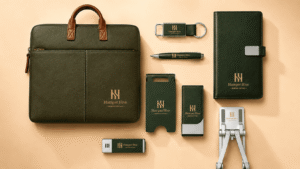
Branded Essentials — items the employee will use daily and see your logo regularly. Examples: company notebook, pen, water bottle, desk organizer, or branded tote bag. These items extend your brand visibility throughout the employee’s workspace and beyond.
Gourmet & Self-Care
— items that create a sensory experience and signal premium quality. Examples: artisanal chocolates, specialty tea or coffee, premium skincare products, scented candles, or wellness items like bath salts. These products communicate that you care about the employee’s wellbeing, not just their productivity.
Personalization Elements
— touches that make the kit feel tailored to the individual. Examples: personalized welcome letter from leadership, employee’s name on packaging, custom color theme matching their department, or a handwritten note. Personalization transforms a gift into an experience.
Cultural & Occasion-Specific Items
— products that reflect your company’s values or the season. Examples: eco-friendly products if sustainability is core to your brand, festival-themed items during Diwali season, or locally sourced artisanal products if you emphasize community. These items deepen cultural resonance and show thoughtfulness.
Before finalizing your welcome kit contents, ask yourself these five questions:
1.
What is the employee’s role?
Senior hires and client-facing roles warrant premium items; entry-level positions can emphasize practical, branded essentials.
2.
What is your company culture?
A creative agency might include art supplies or design books; a financial services firm might emphasize premium stationery and professional items.
3.
What is your budget per employee?
Define this upfront — it determines whether you’re in the entry, mid, or premium tier.
4.
Will you customize for each employee or use a standard kit?
Customization increases cost but dramatically increases impact. Standard kits are more scalable.
5.
What message do you want the kit to send?
Is it “we value creativity,” “we care about wellness,” “we’re premium and professional,” or “we’re culturally aware”? Let this guide product selection.
For companies with Diwali cycles, consider integrating festival-themed items or culturally relevant products that resonate with your workforce. A welcome kit that arrives during Diwali season with traditional sweets, festival-themed packaging, and culturally significant items creates deeper connection than a generic kit.
Customization Options for Brand Impact
Customization is where a welcome kit transforms from a gift into a brand experience. Hamper Hive specializes in corporate gifting solutions with 500+ projects completed across India, and customization is the core of their approach. Here are the primary customization levers:
Logo & Branding — Your company logo can appear on packaging, swing tags, branded items (notebooks, pens, water bottles), or custom labels on products. This ensures your brand is visible every time the employee interacts with the kit.
Personalized Messages
— A welcome letter from the CEO, a handwritten note, or a custom message printed on packaging makes the kit feel tailored to the individual. This is one of the highest-impact customization options because it signals leadership attention.
Custom Color Themes
— Packaging, ribbons, and presentation can be customized to match your brand colors or the employee’s department. This creates visual cohesion and reinforces brand identity.
Swing Tags & Labels
— Custom swing tags with your logo, the employee’s name, or a welcome message add a premium touch and extend branding throughout the kit.
Product Curation
— Instead of a standard selection, you can choose specific products that align with your company values. For example, if sustainability is core to your brand, select eco-friendly products. If wellness is a priority, emphasize self-care items.
Packaging & Presentation
— Artisan-crafted presentation emphasizes visual impact and the unboxing experience. Premium packaging, thoughtful arrangement, and attention to detail make the kit feel like a luxury gift, not a corporate obligation.
The customization process typically follows this timeline: consultation (understanding your needs and budget), design and sampling (creative direction and product selection), review and approval (your sign-off before production), and dispatch (timely delivery). Most corporate clients receive a customized proposal within 24 hours of inquiry.
Cost Framework for Corporate Welcome Kits in INR
Understanding the cost structure helps you plan your budget and set expectations. The corporate gifting budget framework in India ranges from ₹800–₹12,000+ per hamper, depending on customization and contents. Here’s how costs break down:
Entry-Level Kits (₹800–₹2,000 per employee)
- Suitable for: High-volume hiring, startups, budget-conscious organizations
- Includes: Branded notebook, pen, company handbook, welcome letter, artisanal chocolates or tea
- Customization: Basic logo printing, standard packaging
- Best for: Companies hiring 50+ employees annually
Mid-Range Kits (₹2,000–₹5,000 per employee)
- Suitable for: Mid-sized companies, standard employee roles, balanced quality and cost
- Includes: Branded stationery set, premium water bottle, company handbook, personalized welcome message, gourmet snacks, self-care product, small artisanal gift
- Customization: Logo on multiple items, personalized welcome letter, custom color theme
- Best for: Companies hiring 20–50 employees annually or emphasizing brand impact
Premium Kits (₹5,000–₹12,000+ per employee)
- Suitable for: Large enterprises, senior hires, client-facing roles, brand-focused organizations
- Includes: Luxury branded items (leather notebook, premium pen), personalized welcome package, curated gourmet selection, premium self-care products, artisanal or handcrafted item, custom packaging
- Customization: Full branding, personalized packaging with employee’s name, bespoke product selection, artisan-crafted presentation
- Best for: Companies prioritizing employer brand and employee experience
Cost Drivers to Consider:
- Volume: Larger orders (100+ kits) typically reduce per-unit cost by 10–20%
- Customization Complexity: More personalization (names, custom colors, bespoke products) increases cost
- Product Selection: Luxury items (premium skincare, gourmet selections) increase cost; standard items reduce it
- Packaging: Artisan-crafted presentation and premium packaging add 15–25% to base cost
- Timeline: Rush orders (less than 2 weeks) may incur additional charges
For companies planning welcome kits, define your budget per employee first, then work backward to determine which tier and customization options fit. Hamper Hive offers custom-curated hampers tailored to your needs and budget. Contact them for a personalized proposal.
Timeline & Implementation Process
Planning a welcome kit program requires understanding the typical timeline from concept to delivery. Most corporate gifting projects follow this four-step process:
Step 1: Gifting Consultation (1–2 days)
You meet with the gifting partner to discuss your needs, budget, employee count, and brand values. This conversation determines the tier, customization level, and product direction. Most clients receive a customized proposal within 24 hours.
Step 2: Design & Sample (5–7 days)
The gifting partner creates design mockups (packaging, logos, color themes) and prepares sample kits for your review. You see exactly what the final product will look like before committing to full production.
Step 3: Review & Approval (2–3 days)
You review samples, provide feedback, and approve the final design. Any adjustments are made during this phase.
Step 4: Dispatch (3–5 days)
Once approved, production begins and kits are packaged and shipped to your office or directly to new employees. Reliable logistics ensure hampers reach the right place on time.
Total Timeline: 2–3 weeks from consultation to delivery
For companies with seasonal hiring (e.g., post-Diwali expansion), plan 4–6 weeks in advance to allow for consultation, sampling, and production. For ongoing hiring, establish a standing order with your gifting partner so kits are produced and delivered on a rolling basis as new employees join.
Tax Compliance & Legal Considerations for Corporate Gifting in India
Corporate welcome kits have tax implications that vary based on your business structure and the value of gifts. Understanding these rules protects your company and ensures compliance.
Income Tax Implications (Section 37(1) of the Income Tax Act)
Gifts to employees are generally deductible as a business expense under Section 37(1) if they are ordinary and necessary for conducting business. However, there are limits:
- Gifts up to ₹5,000 per employee per financial year are exempt from being treated as perquisite income for the employee
- Gifts exceeding ₹5,000 may be taxable as perquisite income in the employee’s hands
- Gifts must be reasonable in value — extravagant gifts may be disallowed as a deduction
GST Implications
- GST on gifts: If you purchase hampers or gifts, GST is charged on the purchase (typically 5–18% depending on contents)
- Input Tax Credit (ITC): GST paid on gifts is generally not eligible for ITC because gifts are not directly used in business operations. This means the GST cost is borne by your company
- Documentation: Maintain invoices and receipts for all gifts to substantiate the business expense
Compliance Checklist for Corporate Welcome Kits:
1.
Define the gift value
— Ensure individual gifts do not exceed ₹5,000 to avoid perquisite taxation
2.
Document the business purpose
— Maintain records showing that gifts are for employee onboarding and retention
3.
Keep invoices and receipts
— All purchase invoices must be retained for tax audit purposes
4.
Disclose in financial statements
— If gifts are material, disclose them in your annual financial statements
5.
Ensure equal treatment
— Gifts of similar value should be given to employees in similar roles to avoid discrimination claims
6.
Maintain GST compliance
— Ensure your vendor provides proper GST invoices; do not claim ITC on gift purchases
Note: Tax rules and GST applicability can vary based on your business structure and circumstances. Consult your chartered accountant for advice specific to your situation.
Frequently Asked Questions
What is the difference between a corporate welcome kit and a standard onboarding package?
A standard onboarding package typically includes paperwork, IT setup, and logistical items necessary for the employee to start work. A corporate welcome kit adds a curated gift component designed to create an emotional connection and reinforce company culture. The welcome kit is the memorable, shareable part of onboarding; the onboarding package is the functional part. Together, they create a complete first-day experience.
How much should a company spend on a welcome kit per employee?
The budget depends on your company size, hiring volume, and brand priorities. Entry-level kits cost ₹800–₹2,000 and work well for high-volume hiring. Mid-range kits (₹2,000–₹5,000) balance quality and cost for most companies. Premium kits (₹5,000–₹12,000+) are appropriate for senior hires or companies prioritizing employer brand. Define your budget first, then select the tier that fits.
Can welcome kits be customized for different employee roles?
Yes. You can create role-specific kits — for example, a premium kit for senior hires and a mid-range kit for entry-level employees. You can also customize product selection by department (e.g., tech team receives different items than sales team). This increases complexity and cost but creates stronger alignment with employee needs and company values.
What is the typical timeline for ordering customized welcome kits?
Most corporate gifting projects take 2–3 weeks from consultation to delivery: 1–2 days for consultation, 5–7 days for design and sampling, 2–3 days for review and approval, and 3–5 days for production and dispatch. For large orders or rush timelines, plan accordingly and discuss with your gifting partner.
Are corporate gifts tax deductible in India?
Gifts to employees are generally deductible as a business expense under Section 37(1) of the Income Tax Act if they are ordinary and necessary for business. However, gifts exceeding ₹5,000 per employee per financial year may be taxable as perquisite income. Consult your chartered accountant for advice specific to your situation.
What products should be included in a welcome kit?
Include items across four categories: branded essentials (notebook, pen, water bottle), gourmet and self-care products (chocolates, tea, skincare), personalization elements (welcome letter, custom packaging), and cultural or occasion-specific items (eco-friendly products, festival-themed items). The specific products depend on your company culture, budget, and the employee’s role.
Can welcome kits be delivered directly to employees’ homes?
Yes. Many companies arrange for kits to be delivered to employees’ homes before their first day, creating a positive first impression before they arrive at the office. Alternatively, kits can be presented on the first day at the office. Discuss delivery preferences with your gifting partner.
What is the best time to send a welcome kit to a new employee?
Ideal timing is 2–3 days before the employee’s first day, so they receive it at home and feel welcomed before arriving at the office. Alternatively, present it on the first day as part of the onboarding experience. For remote employees, delivery to their home address is the best approach.
How do I measure the impact of a welcome kit program?
Track metrics like new-hire retention rate (compare employees who received kits vs. those who didn’t), employee engagement scores in the first 90 days, and social media mentions or shares of the kit. Conduct brief surveys asking new hires about their first impression and whether the kit made them feel welcomed. These data points help justify the investment and refine future kits.
Conclusion
A customized corporate welcome kit is more than a gift — it’s a strategic tool for building culture, reducing new-hire turnover, and reinforcing your employer brand from day one. By understanding what to include, how to customize for impact, realistic costs in INR, timelines, and tax compliance specific to India, you can design a welcome kit program that actually delivers business results.
The difference between a generic hamper and a customized welcome kit is the difference between a forgotten obligation and a memorable experience. A thoughtfully designed kit signals that your company is organized, premium, and attentive — qualities that new employees notice and remember. When you invest in a beautiful, personalized welcome kit, you’re not just giving a gift; you’re building a relationship.
If this guide has helped you think through your gifting strategy, the next step is simple: tell us your occasion, your approximate budget, and your recipient count — and Hamper Hive will put together a customised proposal with product suggestions, design options, and a cost breakdown tailored to your business. You can reach the team at +91 9769 696125 or info@hamperhive.com. Most clients have a quote in hand within 24 hours.